Editor's News Trails
Publisher-associated editorial trails will appear here when an editorial publishing workflow is available.
Publisher profile
outbreaknewstoday.substack.com
Explore recent coverage from this publisher, with reporting context brought together on Scroll News.
Reporting, in context
No article image available
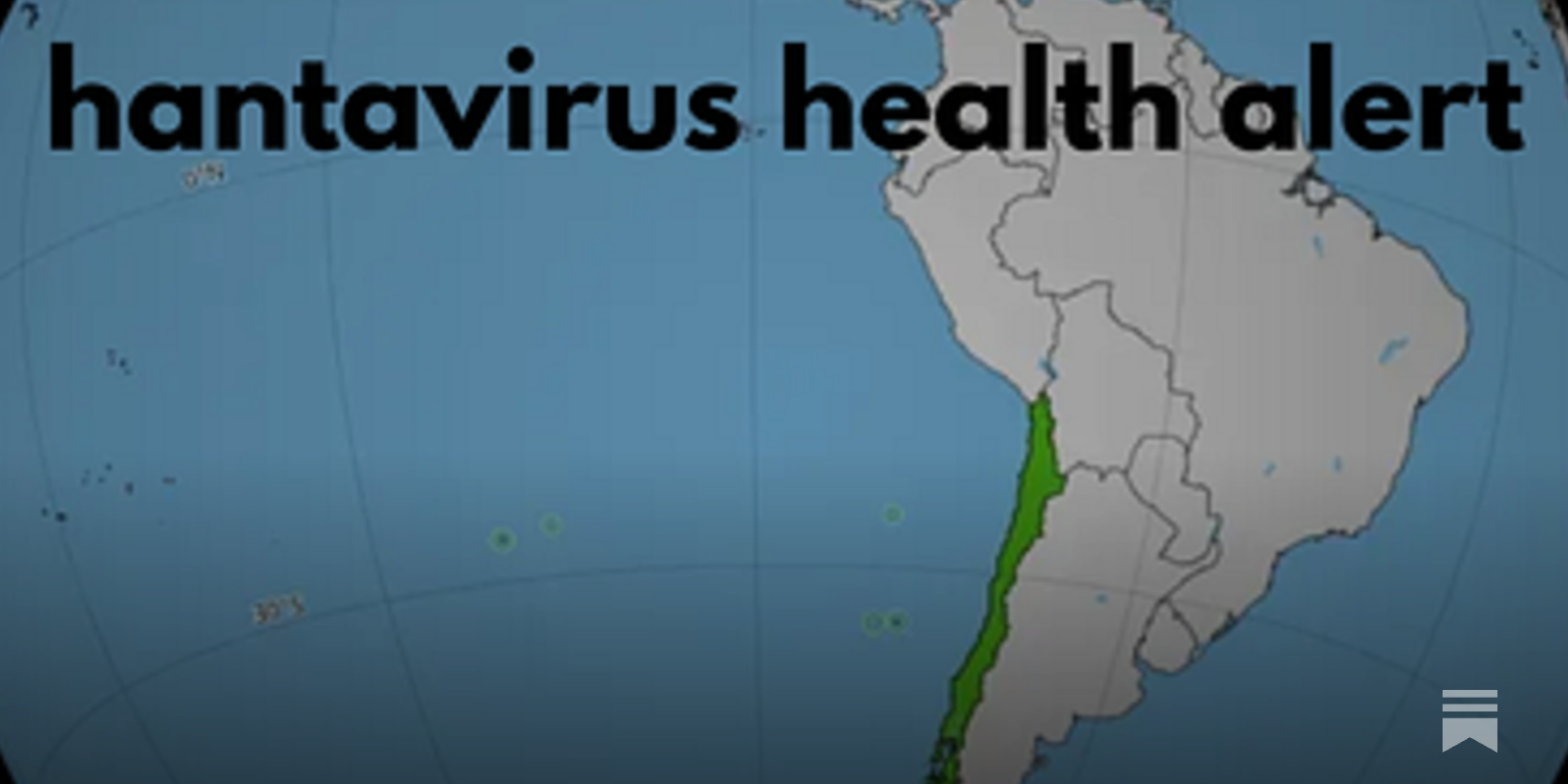
The Chile Ministry of Health issued a Health Alert for hantavirus and other diseases, such as some arboviruses and avian influenza. This is the first time this measure has been taken and it will be in effect until July 31, 2027 and it extends from the Atacama region to the Magallanes region. “Hantavirus causes a disease that is endemic to Chile, transmitted by the long-tailed pygmy rice rat that lives in rural and semi-rural areas throughout almost the entire country. As a ministry, we are constantly monitoring its behavior and are very concerned and actively working because this year the virus's lethality has increased, and for this reason, we decided to declare this alert. As of last week, there were 46 confirmed cases and 18 deaths, representing a 39% lethality rate,” reported the Undersecretary of Public Health, Dr. Alejandra Pizarro. Cases have occurred in the regions of Valparaíso, Metropolitan, O'Higgins, Maule, Ñuble, Biobío, La Araucanía, Los Ríos, Los Lagos, and Aysén. By comparison, in 2025, there were 44 infections and eight deaths (18% case fatality rate). The health alert, which is preventative and prepared, will allow for the granting of extraordinary powers in the event of serious health emergencies to strengthen surveillance, ensure timely resource management, hire specialized personnel, implement health control measures, and expedite the acquisition of supplies through direct procurement. The alert does not imply that there is an ongoing epidemic or that the healthcare system is overwhelmed. Subscribe to Outbreak News TV on YouTube “Hantavirus is not exclusively a summer virus, as the long-tailed pygmy rice rat is present year-round. Therefore, we urge everyone to take extreme precautions: avoid touching rodents, ventilate homes before entering if they have been closed, clean unused spaces with water and bleach, and keep garbage covered and food stored away. Furthermore, it is crucial to be aware of the symptoms: fever, intense muscle pain, and difficulty breathing. If someone experiences these symptoms and has been in rural or semi-rural areas where the long-tailed pygmy rice rat may have been present, they should immediately go to a health center and inform the medical staff so that a hantavirus diagnosis can be considered promptly,” the official added. Since December 2025, the Pan American Health Organization (PAHO) has maintained an epidemiological alert due to the rise in hantavirus cases throughout the Southern Cone, and that the Ministry of Health had an epidemiological alert in place since November of last year. Chile eliminates leprosy As mentioned above, the Health Alert decree also covers diseases transmitted by the Aedes aegypti, Aedes vexans, and Anopheles pseudopunctipennis mosquitoes, such as dengue and Zika, which, according to the alert, “have a high epidemic potential, which could generate high demand and overload for health facilities.” For these diseases, the alert is in effect from Arica to Los Ríos. The authority stressed that it is essential to prevent mosquitoes from breeding in stagnant water and to monitor any suspected cases of people arriving from abroad infected with any of these diseases, in order to prevent any of these vectors from biting a sick person and starting to spread the disease. In the case of avian influenza, the alert was extended to the entire country, because unlike other years, the disease has been concentrated in wild and farm birds, not in poultry farms, increasing the risk of exposure for people. Outbreak News Today is a reader-supported publication. To receive new posts and support my work, consider becoming a free or paid subscriber. Subscribe
The Ministry of Health of the Republic of Azerbaijan reports posts have been circulating on social networks about the widespread spread of epidemic mumps in Baku do not reflect the current epidemiological situation. Health officials say the epidemiological situation of mumps in the country is stable. The registered cases of infection consist of individual sporadic cases, no epidemics or mass spread have been recorded. The current situation is constantly under epidemiological surveillance by relevant medical institutions, and the necessary preventive and counter-epidemic measures are consistently implemented. Epidemic mumps is observed more often among unvaccinated or incompletely vaccinated individuals. The disease is transmitted mainly by airborne droplets - during coughing, sneezing and close contact. The incubation period usually lasts 11–23 days. The main symptoms of the disease are fever, swelling and pain in the parotid salivary glands, discomfort when chewing and swallowing, general weakness, headache and loss of appetite. In most cases, mumps is mild and results in complete recovery. However, in rare cases, certain complications may develop in unvaccinated adolescents and adults. Therefore, timely vaccination is of particular importance in preventing the disease. Subscribe to Outbreak News TV on YouTube In accordance with the National Vaccination Schedule in Azerbaijan, the combined measles, mumps, and rubella (MMR) vaccine is administered to children at 12 months of age, with a booster dose at 6 years of age. The MMR vaccine is the most reliable and effective means of protection against mumps. The Ministry of Health recommends that parents check their children’s vaccination status. If for any reason the vaccination has been delayed or missed, it is recommended to contact the medical facility in your area of residence and consult a doctor. To protect yourself from the disease, it is recommended to follow preventive measures such as avoiding close contact with sick people, following personal hygiene rules, washing hands regularly, and frequently ventilating closed spaces. If you experience symptoms of the disease, avoid self-medication, seek medical attention, and do not return to work until you are fully recovered. Citizens are asked to refer only to official sources and not to believe or share unverified information circulating on social networks. Outbreak News Today is a reader-supported publication. To receive new posts and support my work, consider becoming a free or paid subscriber. Subscribe
The World Health Organization (WHO) reports validating Algeria as having eliminated trachoma as a public health problem. This makes Algeria the 29th country globally to achieve this significant milestone. "Algeria’s elimination of trachoma is a historic triumph that connects the past, present, and future of public health, and is rooted in a century-long commitment," said Dr Tedros Adhanom Ghebreyesus, WHO Director-General. "This milestone proves that with sustained political will and on-the-ground leadership from committed health professionals, we can eliminate neglected tropical diseases and build a healthier, more resilient future for all." For decades, Algeria implemented the WHO-recommended SAFE strategy to eliminate trachoma. These activities included provision of surgery to treat the late blinding stage of the disease (“trachomatous trichiasis”, TT), conducting mass administration of antibiotic treatment, carrying out public awareness campaigns to promote facial cleanliness and personal hygiene as well as improvement in access to water supply and sanitation. Trachoma is the first neglected tropical disease to be eliminated in Algeria. Trachoma is a disease of the eye caused by infection with the bacterium Chlamydia trachomatis. It is a public health problem in 30 countries and is responsible for the blindness or visual impairment of about 1.9 million people. Blindness from trachoma is difficult to reverse. Based on November 2025 data, 97 million people live in trachoma endemic areas and are at risk of trachoma blindness. Infection spreads through personal contact (via hands, clothes, bedding or hard surfaces) and by flies that have been in contact with discharge from the eyes or nose of an infected person. With repeated episodes of infection over many years, the eyelashes may be drawn in so that they rub on the surface of the eye. This causes pain and may permanently damage the cornea. In 2024, 87,349 people received surgical treatment for advanced stage of the disease, and 44.4 million people were treated with antibiotics. Global antibiotic coverage in 2024 was 39%. Outbreak News Today is a reader-supported publication. To receive new posts and support my work, consider becoming a free or paid subscriber. Subscribe
Follow a story across time
Explore editorial and community perspectives on connected reporting.
Distinct perspectives · No trails available yet
Publisher-associated editorial trails will appear here when an editorial publishing workflow is available.
Public reader-created trails featuring this publisher's coverage are not shown until privacy-safe discovery is available.
Explore the reporting
Browse recurring subjects across this publisher's coverage.
Publisher-specific topics
Topic discovery is not available for this publisher yet.