When papers become currency: a Chinese debate about trust in science
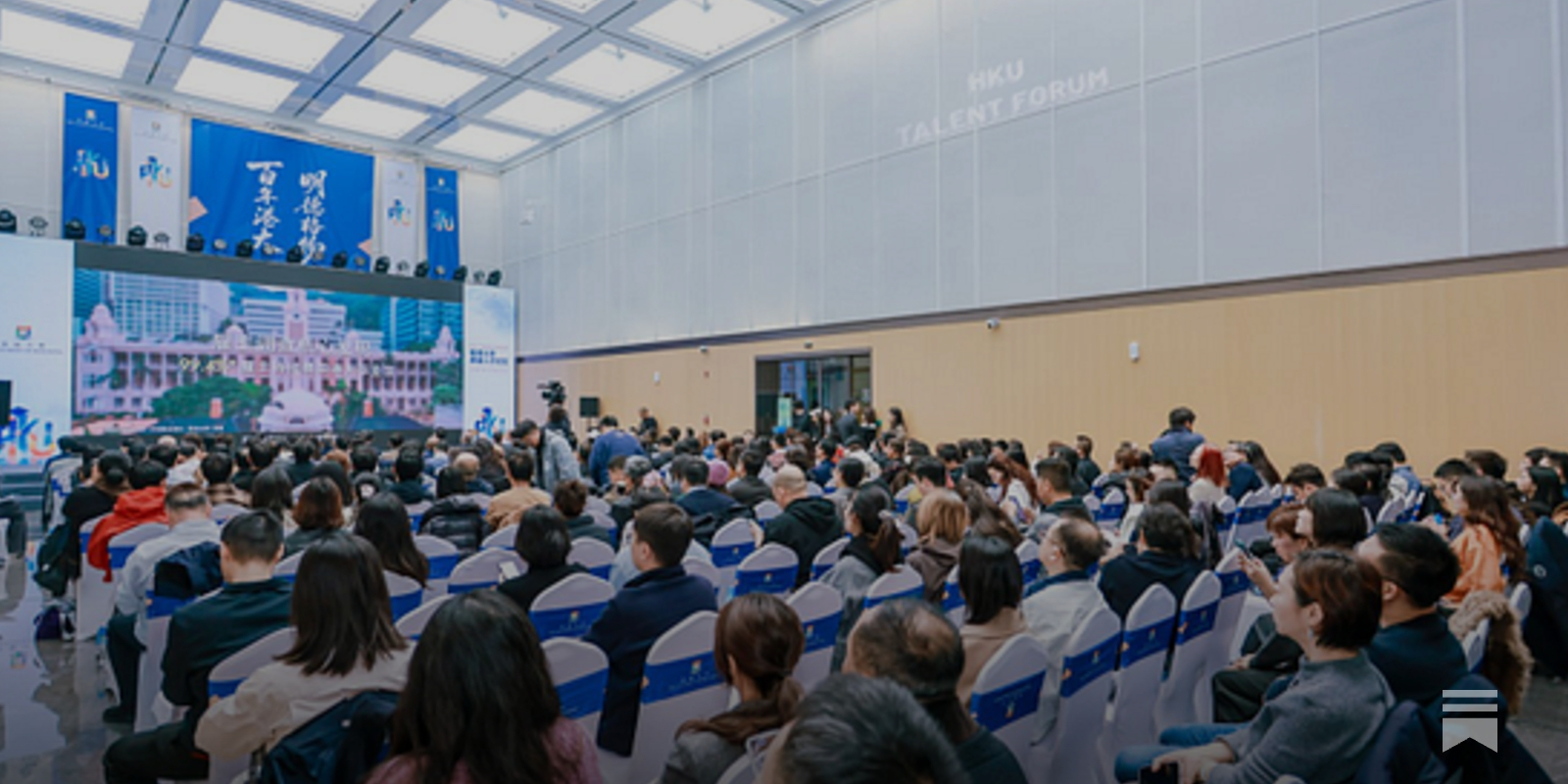
Last Saturday, 31 October, I went to the University of Hong Kong’s Beijing Centre for its Talent Forum. It was the fourth stop in the series this year, following events in Shanghai’s Zhangjiang, Shenzhen’s Qianhai, and on HKU’s main campus. The programme covered a remarkable distance in one afternoon. HKU’s Xiao-Jing Wang discussed computational neuroscience, intelligence, and the prefrontal cortex—before even delivering his inaugural public lecture to students back in Hong Kong. His colleague Bing Zhang took us from the Big Bang to artificial intelligence. Tsinghua’s Xue Lan asked how AI might reshape the institutional infrastructure underpinning higher education. There were lively panels featuring industry leaders from JD.com, Xiaomi, Haier—and Kaiser Y Kuo on the closing panel discussing innovation and international connections. I cannot pretend to have followed every detail of the brain models or the astrophysics. The talk that stayed with me was closer to something we have covered before: Zhou Zhonghe 周忠和 on papers, evaluation, and scientific trust. Zhou is a palaeontologist, an Academician of the Chinese Academy of Sciences, and an international member of the US National Academy of Sciences. He is also editor-in-chief of The Intellectual (知识分子), China’s leading science commentary platform. His subject was uncomfortable enough for a room full of successful academics: what happens when the system for recognising good science starts rewarding something else? Part of my interest came from our sister newsletter, The East is Read, which covered the controversy around “Geng Tongxue” in May. A PhD dropout from Beihang University, Geng has publicly challenged papers by prominent researchers through detailed online allegations of manipulated images and fabricated data. At Tongji University, an investigation into a challenged Nature paper found academic misconduct, and the dean of its life sciences school was removed. The affair brought doubts about academic integrity well beyond laboratories and university committees. How could someone outside the established hierarchy spot problems in papers that had passed through prestigious journals and institutions? And what, exactly, had all that prestige guaranteed? Zhou approached these questions through two essays published in July by The Intellectual: one by Wang Xiaodong, director of the National Institute of Biological Sciences, Beijing, and a response by Wang Liming, of Shanghai’s Shangsi Institute of Natural Sciences. Both began with the controversy over Geng. Their arguments deserve a wider audience, so I want to put parts of them alongside what Zhou said on Saturday. Wang Xiaodong’s starting point is evolution. A research system selects for the behaviour it rewards. Grants, jobs, journals, talent programmes, and prizes collectively determine which scientists prosper and which practices get passed down from advisors to students. “Whatever the system rewards is what it will evolve to produce,” he writes, citing the ancient Chinese saying: The King of Chu loved slender waists, and many in the palace starved to death. That is a more demanding diagnosis than saying there are dishonest people in science. Punishing a fraudster does not change the selective environment that made a particular kind of research profitable. His account also gives scientific success an awkward role in the story. As Zhou put it on Saturday, science became a victim of its own success. Once research became central to industry, national power, and economic growth, universities and laboratories expanded, and public money followed. That created an administrative need for rapid decisions: who should get the next grant, the next laboratory, the next appointment? The difficulty is that the true value of a discovery may take years or decades of testing and building to become clear. Resource allocation cannot wait that long. Publication counts, journal prestige, impact factors, and citations therefore become convenient ways to make an instant judgement. “The real problem is not that these indicators have no value,” Wang Xiaodong writes, “but that they are trying to answer a question that only time can answer.” Telling administrators simply to stop counting papers will never be enough. They still have budgets to distribute and appointments to make. Something has to replace the shortcut. Zhou described the consequences inside publishing. Papers acquire ever more requirements: a complete story, polished presentation, extensive datasets, and accessibility to readers beyond the immediate field. Individually, those demands sound reasonable. Together, he warned, they produce formulaic “eight-legged” papers 八股文 and rigid reviewing, while genuinely original or non-consensus work struggles to get past journal editors—some of whom wield immense gatekeeping power despite having limited laboratory experience themselves. Meanwhile, the demands for sprawling, “complete” narratives have fuelled a wider replication crisis. Wang Xiaodong uses a mahjong metaphor to describe the result: put the complex papers published by the exact same lab over several years side by side, and they often look like “Thirteen Orphans” (十三不靠)—every tile completely unrelated to the next, and none of them reproducible by outsiders. Zhou also spoke frankly as an editor who has trouble finding reviewers. Everyone wants someone else to review their work; qualified senior researchers have little time to return the favour. The labour is anonymous, unpaid, and brings almost no institutional recognition, so it increasingly gets passed down to postdocs and graduate students. And while anonymity protects reviewers from rank and personal favours, hyper-specialisation means an author’s most qualified reviewer is often a direct competitor, shielded from accountability. The protection and the problem coexist. Wang Liming takes the argument a step further. The decisive change, in his essay, is the instant conversion of academic honour into material resources. Once a paper can be cashed in for funding, a job, students, commercial investment, or even a company valuation, scientists are alienated from their work: they must keep minting this “research currency” to keep their teams alive. He is careful not to romanticise the past. The old world of gentleman scientists—financially independent figures like Boyle and Darwin who needed nothing from external funders—was also a closed club that excluded people without inherited wealth, women, and much of humanity outside the West. Professional science allowed ordinary people, himself included, to become researchers. Nobody should want to undo that. The problem, in his account, is an exchange system that becomes too uniform and too difficult to correct. His most pointed Chinese example is the “hat” (帽子): the prestigious talent designation that brings continuing access to money, laboratory space, students, and institutional influence. “If papers are the circulating currency of the research system, then a ‘hat’ is a bond that pays interest over the long term,” he writes. A paper at least requires another round of peer review. A title in the Chinese context can lock in a judgement made years ago and turn it into permanent status rent, regardless of whether its holder is still doing good science. Here, official institutions hire, organise, and evaluate scientists. Unlike honours awarded by autonomous academic communities in the West, a Chinese “hat” blends non-scientist administrative power with state authority. Once granted, it turns a past judgement into permanent status rent that is nearly impossible to revoke—because taking a hat off would imply that official authority erred in putting it on. Both Wangs see China as experiencing, at compressed speed, pressures present across global science. Research expansion, rising investment, publication growth, and elaborate evaluation metrics arrived in China within two or three decades rather than two or three centuries. Zhou agreed with that international framing—noting that recent US White House science policy documents and the new president of the US National Academy of Sciences, a fellow palaeontologist who recently visited Zhou’s institute in Beijing, have raised strikingly similar warnings about consensus-bound peer review, short-term project grants, and the replication crisis. Still, Zhou emphasised that China’s traditional hierarchy, personal networks (guanxi), and the ethos that “a good scholar becomes an official” (学而优则仕) amplify those pressures at home. So what would change things? Here Zhou’s tone differed from the call for a revolution in scientific trust in Wang Xiaodong’s essay. As an evolutionary biologist, Zhou favoured patchwork repair (修修补补). Living systems survive through accumulated adjustments; dramatic mutations are usually fatal. Science cannot return to a small, slow-moving pastoral era, especially after the successive accelerations of professionalisation after the Second World War, the internet, and now artificial intelligence. But it can alter the local environment in which researchers work. He pointed to domestic experiments designed to support unconventional research and diversify funding, including Tencent’s New Cornerstone Investigator Program, the Xplorer Prize, and the Future Science Prize. He also mentioned participating in reviews for “major non-consensus projects” under the National Natural Science Foundation of China. One guiding principle he recalled was wonderfully direct: “Failure is allowed; corruption is not” (允许失败,不允许腐败). That distinction would mean quite a lot if taken seriously. An honest attempt that fails should not have to disguise itself as a success to survive an assessment. Wang Liming’s essay adds a sharp caveat to the optimism about new domestic funders. Multiple organisations do not automatically produce multiple ways of judging science. If the same pool of senior domestic scientists makes the decisions through the same two-round review procedures, it is still “fake diversity.” He argues for three distinct kinds of money: broad baseline funding governed by fair procedures; patient funding for questions that take ten years; and non-consensus funding based on individual taste, deliberately empowering a few genuine experts to make biased, contrarian bets on eccentric ideas that would inevitably be averaged out by a committee. Replacing one monopoly with another achieves little; a healthy ecosystem needs variance. Zhou’s proposals for publishing were similarly concrete: strip papers of their resource-allocation burden and return them to recording discoveries and establishing priority; separate dissemination from evaluation, as eLife and Peer Community In do; adopt more modular “micro-publications” and real-name endorsements; recognize the labour of editors and reviewers; and give replication work proper credit rather than treating it as an unpublishable dead end. AI makes every part of this debate more urgent—and Zhou wove it throughout his talk. In his own preparation, he used AI to survey the declining influence of academic monographs, noting how tools are already changing how scholars gather information. More fundamentally, he placed AI as the latest great acceleration in scientific history: just as the internet sped up the pace of research and tightened external resource pressures, AI is compressing the cycle again. In the essays Zhou cited, AI cuts both ways. Wang Xiaodong expects large language models to erase much of the English-writing disadvantage long faced by Chinese scientists, further swelling the flood of papers coming out of Chinese labs. Wang Liming sees AI accelerating both ends of the trust crisis: it lowers the cost of paper mills and fabricated images just as quickly as it lowers the cost of automated image forensics, data auditing, and code reproduction. “Whoever builds the verification layer wins,” Wang Liming writes. His proposed alternative to the static, packaged “story paper” is a continuously versioned “unit of discovery” containing a falsifiable claim, raw data, analysis code, experimental parameters, and an ongoing log of independent checks—where negative results and failed replications are recorded rather than buried. Zhou ended his keynote by bringing AI back to the question of scientific honour and credit. Citing a recent Intellectual discussion on “What AI Means for Mathematics” featuring Fields Medalist Deng Yu 邓煜—at a moment when AI is already batch-solving mathematical conjectures, as HKU Vice-President Lin Chen noted in his opening remarks—Zhou agreed that human researchers must remain the principal agents: AI is a tool that frees scientists from tedious calculation to think about deeper, messier real-world problems. Yet that partnership creates a thorny new evaluation problem. When a breakthrough is made with AI, what is the human contribution and what is the machine’s? And since AI models distil centuries of accumulated human scholarship, is it right that the credit and value flow so heavily to the private AI companies building the tools? The old struggle over how to assign scientific honour is acquiring a whole new layer. What I took away was a serious discussion of how science can remain trustworthy as its scale, incentives, and tools change. These were scientists with real standing inside China’s system questioning how that standing is produced, and proposing changes that would affect their own institutions and peers. That made the afternoon at HKU’s Beijing Centre worthwhile. At the close, Wang Feng, Director of Communications and Public Affairs at HKU, said the value of the forum series—which heads to Hangzhou in December and cities like Chengdu early next year—would lie in the real cooperation it helped bring about. The university has plenty to celebrate: this week it topped the QS Asia rankings for a second consecutive year, alongside its 11th-place position in the QS World University Rankings 2027. For me, bringing this debate to an audience beyond the people who review papers and allocate grants was a useful contribution. Share [ The East is Read PhD dropout’s exposé forces an academic fraud reckoning in China A former doctoral student turned blogger has shaken China’s academic establishment by publicly accusing prominent university scholars of fabricating data and manipulating papers, triggering investigations at several leading institutions and drawing rare attention from state media… Read more 5 months ago · 43 likes · 8 comments · Yuxuan JIA ](https://www.eastisread.com/p/phd-dropouts-expose-forces-an-academic?utm_source=substack&utm_campaign=post_embed&utm_medium=web&embedding_publication_id=47580)
https://www.pekingnology.com/p/when-papers-become-currency-a-chinese